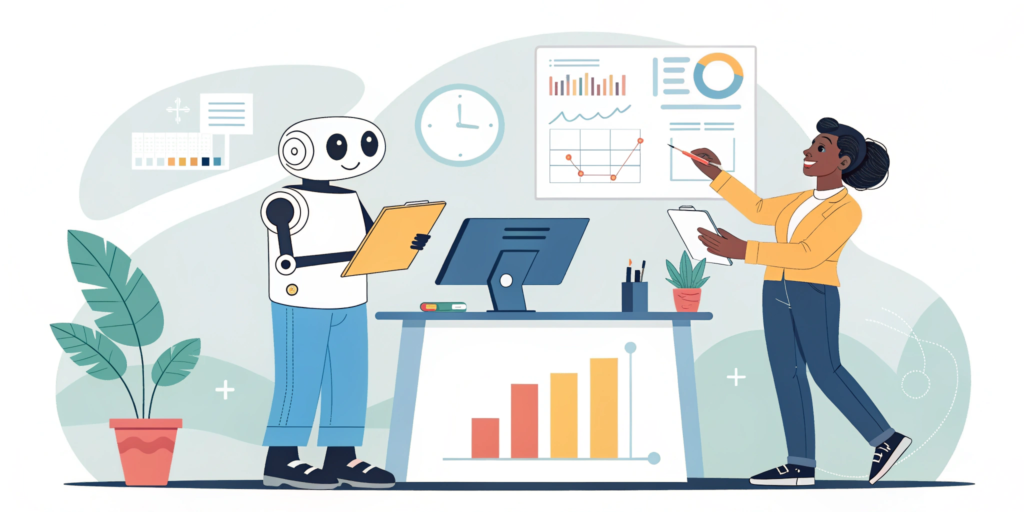
Ever feel like running your small business is a 24/7 job? You’re not alone. Most small business owners spend more time on repetitive tasks than on strategy or growth. But here’s the good news: AI for business operations can take that burden off your plate and let you focus on what really matters, growing your business.
In this article, we’ll break down exactly how small businesses are using AI to automate daily tasks, boost efficiency, and save money. Whether you run a café, a boutique, or an online shop, this guide will show you practical ways to put AI to work today.
Why Small Businesses Need AI for Business Operations
Small businesses face tight budgets, limited staff, and endless to-do lists. AI helps by:
- Reducing manual work
- Improving accuracy
- Streamlining processes
- Providing data-driven insights
Instead of hiring extra employees, you can use AI-powered tools to automate scheduling, customer service, accounting, and even marketing. Think of it as having a digital assistant that never sleeps.
1. Automating Administrative Tasks
Administrative tasks like data entry, scheduling, and inventory management can eat hours out of your week. AI handles these with ease:
- Scheduling: Tools like Calendly and x.ai automatically manage appointments.
- Email sorting: AI tools can categorize, prioritize, and even draft responses.
- Inventory tracking: Smart software predicts stock needs and alerts you before shortages occur.
By automating these tasks, you free up time to focus on growth and customer relationships.
2. Streamlining Customer Service

Customers expect fast responses. AI chatbots and virtual assistants help small businesses keep up:
- Instant replies: Chatbots respond 24/7 to FAQs.
- Lead qualification: AI sorts serious buyers from casual browsers.
- Personalized recommendations: Machine learning suggests products based on customer behavior.
AI for business operations in customer service improves satisfaction and reduces staff burnout.
3. Enhancing Marketing Efforts
Marketing is critical, but creating campaigns manually is time-consuming. AI steps in to optimize efforts:
- Content creation: Tools like Jasper or Copy.ai generate blog posts, social media captions, and email campaigns.
- Email marketing automation: AI segments audiences, schedules emails, and personalizes messaging.
- Social media management: AI platforms analyze engagement, suggest posting times, and even auto-generate captions.
With AI handling the repetitive marketing tasks, you can focus on strategy and creative campaigns that actually convert.
4. Optimizing Accounting and Finances

Finance management can be overwhelming for small businesses. AI makes it easier:
- Expense tracking: Tools automatically categorize transactions and spot anomalies.
- Invoice management: AI generates invoices and sends reminders.
- Cash flow forecasting: Machine learning predicts future cash flow based on historical data.
AI for business operations in accounting reduces errors, improves decision-making, and saves hours of manual work every month.
5. Improving Sales Processes
AI also plays a huge role in sales automation:
- Lead scoring: AI ranks prospects by likelihood to convert.
- CRM automation: AI updates customer records and tracks interactions without manual entry.
- Predictive analytics: Machine learning identifies trends and sales opportunities.
Using AI in sales not only increases revenue but also gives your team more time to close deals.
6. Streamlining HR and Employee Management
Even small businesses need HR efficiency. AI can handle:
- Recruitment: AI screens resumes and shortlists candidates quickly.
- Scheduling: Automated shift planning reduces conflicts.
- Performance tracking: AI monitors employee KPIs and productivity patterns.
AI for business operations in HR ensures your team runs smoothly without excessive manual oversight.
7. Real-World Examples of Small Business AI Adoption
- Local cafés use AI to predict peak hours and optimize staffing.
- E-commerce stores deploy chatbots to handle common questions and suggest products.
- Marketing agencies rely on AI tools to draft blog posts and social media content automatically.
These examples show that AI isn’t just for tech giants, it’s practical and affordable for small businesses too.
FAQs About AI for Business Operations
Q1: Can small businesses afford AI tools?
Absolutely. Many AI tools are subscription-based and scalable, meaning you pay for what you need. Free versions often cover basic tasks.
Q2: Will AI replace my employees?
No. AI automates repetitive work, freeing your team to focus on creativity, strategy, and customer relationships.
Q3: How hard is it to implement AI?
Most AI tools are plug-and-play. With a little setup and training, you can start automating tasks within days.
Q4: Is my data safe with AI tools?
Reputable AI platforms use encryption and follow strict data privacy regulations, but always read terms before integrating any tool.
Conclusion: Take Action Today
Small businesses that embrace AI for business operations gain a serious advantage. From automating daily tasks to improving customer service and boosting sales, AI saves time, money, and stress.
Don’t wait. Start by identifying the most repetitive tasks in your business and explore AI tools that can handle them. Your team, your customers, and your bottom line will thank you.