
What if your business could work smarter, close deals faster, and save hours every single day without hiring more people?
That’s not hype. That’s exactly what AI tools for business already do for thousands of American companies right now.
Why AI Isn’t Optional Anymore
AI no longer belongs to Silicon Valley giants only. Small businesses, startups, and growing brands across the US now use AI tools for business to automate tasks, cut costs, and scale faster than ever.
I’ve spent over a decade writing and consulting for American publications and businesses. One thing stays crystal clear in 2025: companies that adopt AI early win more customers, move faster, and dominate their niches.
In this guide, I’ll break down the best AI tools for business, explain how they work, and show you how to use them strategically without tech overwhelm.
Why AI Tools for Business Matter More Than Ever
Businesses face tighter margins, tougher competition, and higher customer expectations. AI steps in as a competitive equalizer.
AI helps businesses:
- Automate repetitive tasks
- Make smarter data-driven decisions
- Improve customer experience
- Increase revenue with fewer resources
Modern AI tools for business don’t replace humans actually they multiply productivity.
Top Categories of AI Tools for Business
Before diving into specific platforms, let’s clarify where AI delivers the biggest impact.
Core AI use cases:
- Marketing and content creation
- Sales and lead generation
- Customer support and chatbots
- Operations and automation
- Data analysis and forecasting
Each category solves a real business pain point.
Best AI Tools for Business in Marketing
Marketing teams feel the biggest AI revolution first. AI now handles content, ads, SEO, and personalization at scale.
1. ChatGPT (Content & Strategy)
ChatGPT helps businesses brainstorm ideas, write drafts, and refine messaging.
Best uses:
- Blog outlines and articles
- Email marketing copy
- Ad creatives
- Social media captions
ChatGPT stands as one of the most flexible AI tools for business because it adapts to nearly every industry.
2. Jasper AI (Brand-Focused Copywriting)
Jasper targets brands that need consistent tone and voice.
Why businesses love it:
- Brand voice memory
- SEO-optimized content
- Long-form blog support
Jasper fits perfectly for teams that publish frequently.
3. Surfer SEO (AI + Search Optimization)
Surfer SEO combines AI writing with real-time SEO data.
Key benefits:
- Keyword optimization
- Content scoring
- SERP analysis
Businesses that rely on organic traffic often rank faster with this AI-driven approach.
Best AI Tools for Business in Sales
Sales teams use AI to identify leads, personalize outreach, and close deals faster.

HubSpot AI (CRM & Sales Automation)
HubSpot integrates AI directly into its CRM ecosystem.
What it does well:
- Predictive lead scoring
- Automated follow-ups
- Sales forecasting
HubSpot proves that AI tools for business work best when they connect data across teams.
5. Apollo AI (Prospecting & Outreach)
Apollo helps businesses find and contact ideal customers.
Top features:
- AI-powered lead discovery
- Email sequencing
- Contact enrichment
Sales reps save hours while improving response rates.
Best AI Tools for Business in Customer Support
Customers expect instant answers. AI delivers that speed without burning out your team.
6. Intercom AI (Smart Chatbots)
Intercom uses AI to handle customer conversations intelligently.
Why it works:
- Human-like responses
- Ticket automation
- Customer intent detection
Many businesses cut support costs dramatically with AI-driven chat.
7. Zendesk AI (Support Optimization)
Zendesk adds AI insights to customer service workflows.
Benefits include:
- Automated ticket routing
- Sentiment analysis
- Faster resolution times
Customer satisfaction improves when support responds faster and smarter.
Best AI Tools for Business Operations & Automation
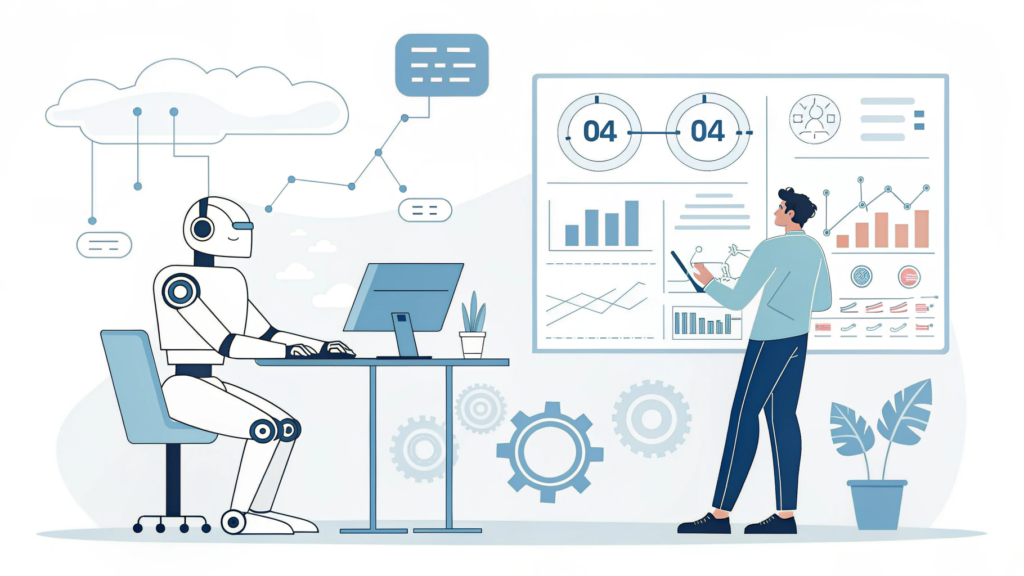
Operations often hide the biggest efficiency leaks. AI fixes them quietly but powerfully.
8. Zapier AI (Workflow Automation)
Zapier connects thousands of apps using AI-driven triggers.
Popular automations:
- Lead capture to CRM
- Email follow-ups
- Data syncing
Businesses love how easily Zapier scales repetitive tasks.
9. Notion AI (Knowledge Management)
Notion AI transforms internal documentation and planning.
Use cases:
- Meeting summaries
- Project planning
- SOP creation
Teams stay aligned without endless meetings.
Best AI Tools for Business Data & Analytics
Data drives decisions—but only when businesses understand it.
10. Tableau AI (Visual Analytics)
Tableau uses AI to surface insights automatically.
Why companies use it:
- Predictive analytics
- Trend detection
- Visual dashboards
Executives make faster decisions with clearer data.
11. Peltarion / DataRobot (Advanced AI Modeling)
These tools help businesses deploy machine learning without deep coding skills.
Ideal for:
- Demand forecasting
- Risk analysis
- Pricing optimization
Large and mid-sized companies gain serious strategic advantages here.
How to Choose the Right AI Tools for Business
Not every tool fits every business. Smart selection matters.
Ask yourself:
- What task eats the most time today?
- Which process blocks growth?
- Do I need speed, accuracy, or scale?
Start small. Expand once you see ROI.
Common Mistakes Businesses Make With AI
Many companies rush AI adoption and waste money.
Avoid these mistakes:
- Buying too many tools at once
- Ignoring team training
- Expecting instant results
- Skipping integration planning
Successful AI adoption stays strategic, not impulsive.
The Future of AI Tools for Business
AI adoption will only accelerate. Businesses that delay adoption risk falling behind.
Expect AI to:
- Become more conversational
- Integrate deeply with workflows
- Personalize experiences in real time
Forward-thinking companies already prepare for this shift.
Conclusion: AI Rewards Action Takers
AI doesn’t replace ambition, it amplifies it. Businesses that adopt AI tools for business today position themselves for faster growth, better decisions, and stronger customer relationships tomorrow.
If you want to stay competitive in 2026 and beyond, start now. Pick one tool. Test it. Measure results. Then scale.
The future favors businesses that act.
Frequently Asked Questions (FAQs)
What are AI tools for business?
AI tools for business use artificial intelligence to automate tasks, analyze data, improve decision-making, and boost efficiency across departments.
Do small businesses really need AI tools?
Yes. Small businesses often gain the biggest advantage because AI saves time, reduces costs, and levels the playing field against larger competitors.
Are AI tools expensive?
Many AI tools offer affordable plans or free tiers. Businesses usually save more money than they spend once automation kicks in.
Can AI tools replace employees?
AI supports employees instead of replacing them. Teams focus on strategy and creativity while AI handles repetitive work.
How fast can businesses see results from AI?
Most businesses notice productivity gains within weeks, especially in marketing, sales, and customer support.